Get In Touch
- +918920243588
- info@mistermisting.com
- WZ-8/5 A, Kirti Nagar Industrial Area, New Delhi - 110015, Delhi
Quick Links
Menu

A humidification system adds controlled moisture into the air so humidity stays within the range a space, process, or material actually needs. Dry air isn't just uncomfortable in a lot of industrial and commercial settings, it quietly damages materials, disrupts production, and throws off product quality in ways that are annoying and expensive to fix once they've already happened.
It's not just about spraying water into a room and hoping it works out. A proper system uses fine atomised mist—fine enough to fully evaporate into the air so humidity rises evenly without leaving floors, machinery, or stored goods wet. The point isn't to make a space damp. It's to get the moisture content of the air sitting exactly where it needs to be.
At Mister Misting, we design around what the space is actually being used for. A textile unit, a warehouse, and a greenhouse all need very different humidity behaviour, even when the equipment involved looks pretty similar on paper.
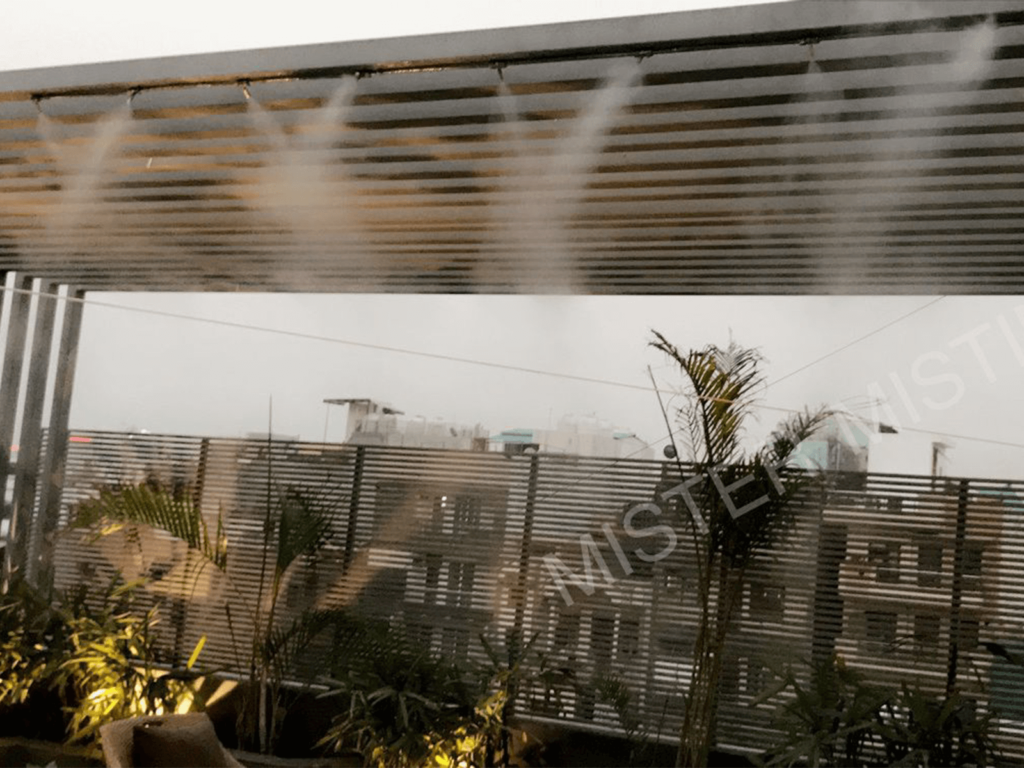
A pump pushes water through fine-mist nozzles at high pressure, breaking it into droplets small enough to evaporate straight into the air instead of falling and pooling on surfaces. As that water evaporates, it adds moisture to the air and raises the relative humidity of the space.
Most systems get paired with humidity sensors and automated controls placed at key points, so the system kicks in once levels drop below a set threshold and stops once the target's reached—rather than just running non-stop regardless of what's actually happening in the room.
Getting this right comes down to a few things: nozzle placement, how air moves through the space, and how the system interacts with any existing HVAC or ventilation. Skip that planning and you end up with uneven pockets of humidity instead of a consistent environment across the whole space.
Humidification isn't just about getting moisture into the air. It's about getting the right amount, in the right place, consistently—without creating new problems like condensation or patchy coverage. That takes understanding the space and the process behind it, not just installing standard equipment and calling it a day.
We handle site assessment, design, installation, and ongoing maintenance as one team, so you're not stuck coordinating between different vendors every time something needs adjusting.
With 600+ projects across industrial, commercial, and agricultural sites, we've worked through a fairly wide range of humidity-control needs by now, and that experience shapes how we approach each new site.
Precision fine-mist nozzles: For even, controlled moisture distribution without wetting.
Humidity sensors and automated controls: That respond to real conditions, not a fixed schedule.
Corrosion-resistant components: Built for continuous industrial use and harsh environments.
Scalable design: Functions flawlessly whether for a single room or a full facility.
Custom layout planning: Based on space size, airflow, and specific process needs.
Integration: Can integrate smoothly with existing HVAC and ventilation systems where needed.
Different materials and environments need different levels of care. Here's where precision humidification shines.
Dry conditions make fabric fibres brittle and weak, which leads to breakage during spinning and weaving. Controlled humidity keeps fibres pliable and cuts down on production losses.
Paper is constantly absorbing and releasing moisture, and dry air causes curling, static, and misalignment mid-print. Keeping humidity stable keeps paper dimensionally consistent throughout.
A lot of food products lose weight and quality through moisture loss during storage and processing. Controlled humidity helps hold onto texture, weight, and shelf life where it actually matters.
Stored goods—packaging materials, electronics, certain raw materials—can be sensitive to humidity swings. Keeping levels steady protects inventory that's sitting in storage for long stretches.
Plants need specific humidity ranges to grow properly, and dry air stresses crops almost as much as extreme heat does. Humidification helps hold the microclimate a greenhouse is designed around.
Static buildup and material inconsistency from dry air disrupt processes across electronics, plastics, and general manufacturing areas where controlled conditions directly affect output quality.
Depends on the system design and where the sensors sit, but a well-designed setup can hold humidity within a fairly tight range—which matters a lot for sensitive processes like textiles and printing.
It shouldn't, if it's designed properly—the droplets are meant to evaporate straight into the air. Condensation problems usually mean a system's oversized or not matched well to the space.
Yes, most systems we install use humidity sensors to switch on and off automatically based on real-time conditions.
In most cases, yes, humidification usually integrates with existing ventilation and climate control rather than replacing it.
Routine nozzle cleaning plus periodic pump and sensor checks usually cover it. How often depends on water quality and how continuously the system's running.
Yes, though bigger spaces generally need multiple nozzle zones and sensor points to keep humidity even across the whole area.
Whether it's protecting fabric in a textile unit, keeping paper stable in a printing facility, or holding the right microclimate in a greenhouse, a properly designed humidification system solves a problem that's easy to overlook—until it starts showing up in product quality.
We'll assess your space and build something around what it actually needs.